ALT Klarinet
  • Thin
  • ExtraLight
  • Light
  • Regular
  • Semibold
  • Bold
Everything is a self-portrait. Everything is a diary.
  • Thin
  • ExtraLight
  • Light
  • Regular
  • Semibold
  • Bold
The Neapolitan flip coffee pot (Italian: napoletana or caffettiera napoletana) is a drip brew coffeemaker for the stove top that was very popular in Italy until last century. Unlike a moka express, a napoletana does not use the pressure of steam to force the water through the coffee, relying instead on gravity. The napoletana was invented in 1819 by a Frenchman named Morize. It was originally constructed out of copper, until 1886, when the material was switched to aluminum. The reason for taking its name from the city of Naples is due to the fact that Morize was in love with a Neapolitan girl. The namesake cuccumella derives from cuccuma, meaning “copper or terracotta vase”.
  • Thin
  • ExtraLight
  • Light
  • Regular
  • Semibold
  • Bold
It consists of a bottom section filled with water, a filter section in the middle filled with finely ground coffee, and an upside-down pot placed on the top. When the water boils, the entire three-part coffee maker is flipped over to let the water filter through the coffee grounds. Once the water has dripped through the grounds, the water-boiling and filter sections are removed, and the coffee is served from the remaining pot. If coarse grounds are used, the coffee is brewed quite mildly. Using very finely ground coffee in the “Neapolitan” style, roasted colour “cloak of monk”, this method can produce a coffee that has a stronger flavor than an automatic drip brew maker. The cuppetiello is a small paper cone (which is used in other ways in Naples, such as holding food) that goes over the spout.
  • Thin
  • ExtraLight
  • Light
  • Regular
  • Semibold
  • Bold
We craft unique, forward-thinking typefaces fit for purpose, optimised for both digital and printed spaces.
  • Thin
  • ExtraLight
  • Light
  • Regular
  • Semibold
  • Bold
The Michelangelo virus is a computer virus first discovered on 4 February 1991 in Australia. The virus was designed to infect DOS systems, but did not engage the operating system or make any OS calls. Michelangelo, like all boot sector viruses, operated at the BIOS level.
  • Thin
  • ExtraLight
  • Light
  • Regular
  • Semibold
  • Bold
01. Artist Statement
02. Commitment
03. Location
04. Formats
05. Program
06. F.A.Q.
  • Thin
  • ExtraLight
  • Light
  • Regular
  • Semibold
  • Bold
London (UK)
Alt Type Production ©
2021-2026
@alt__tf
  • Thin
  • ExtraLight
  • Light
  • Regular
  • Semibold
  • Bold

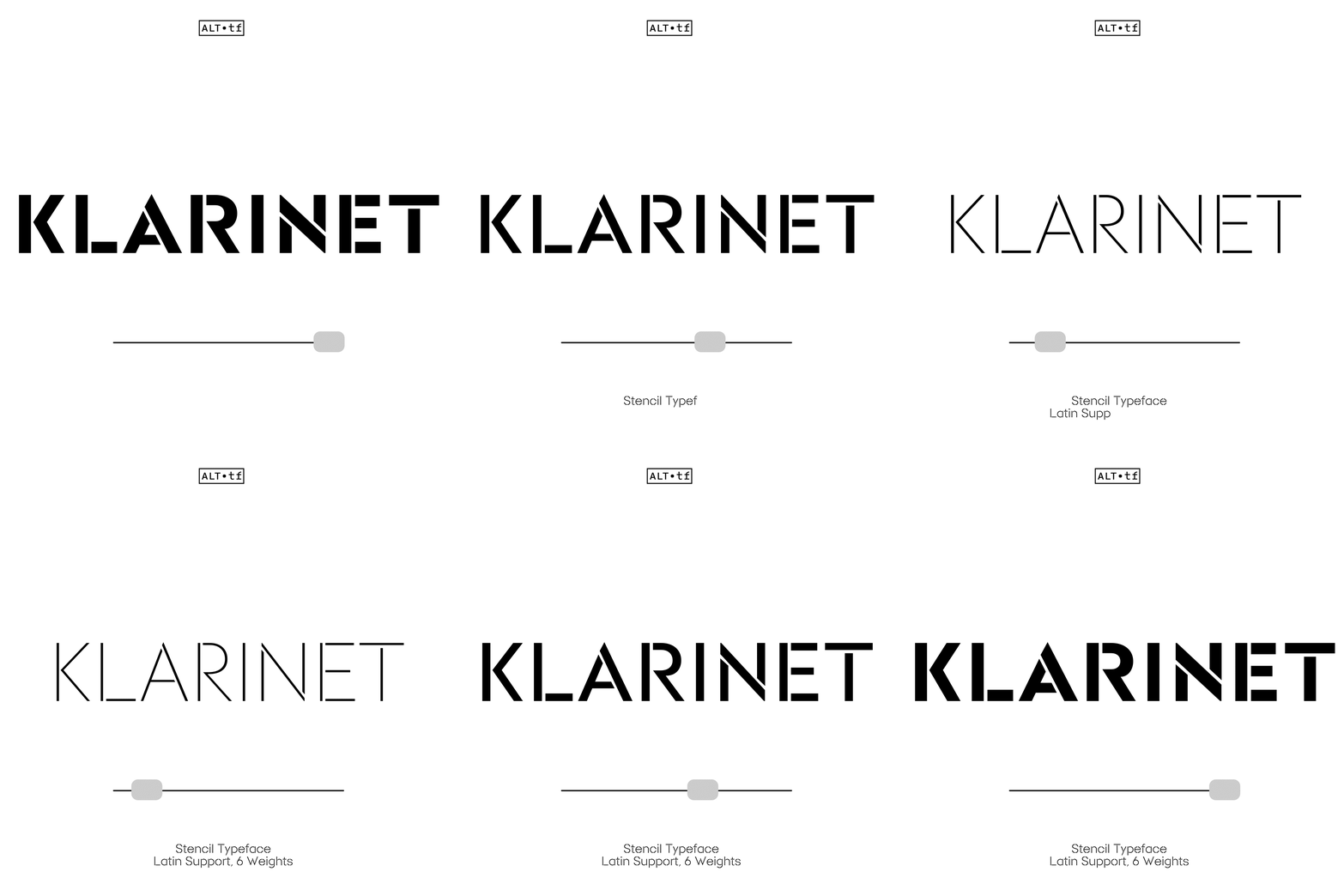
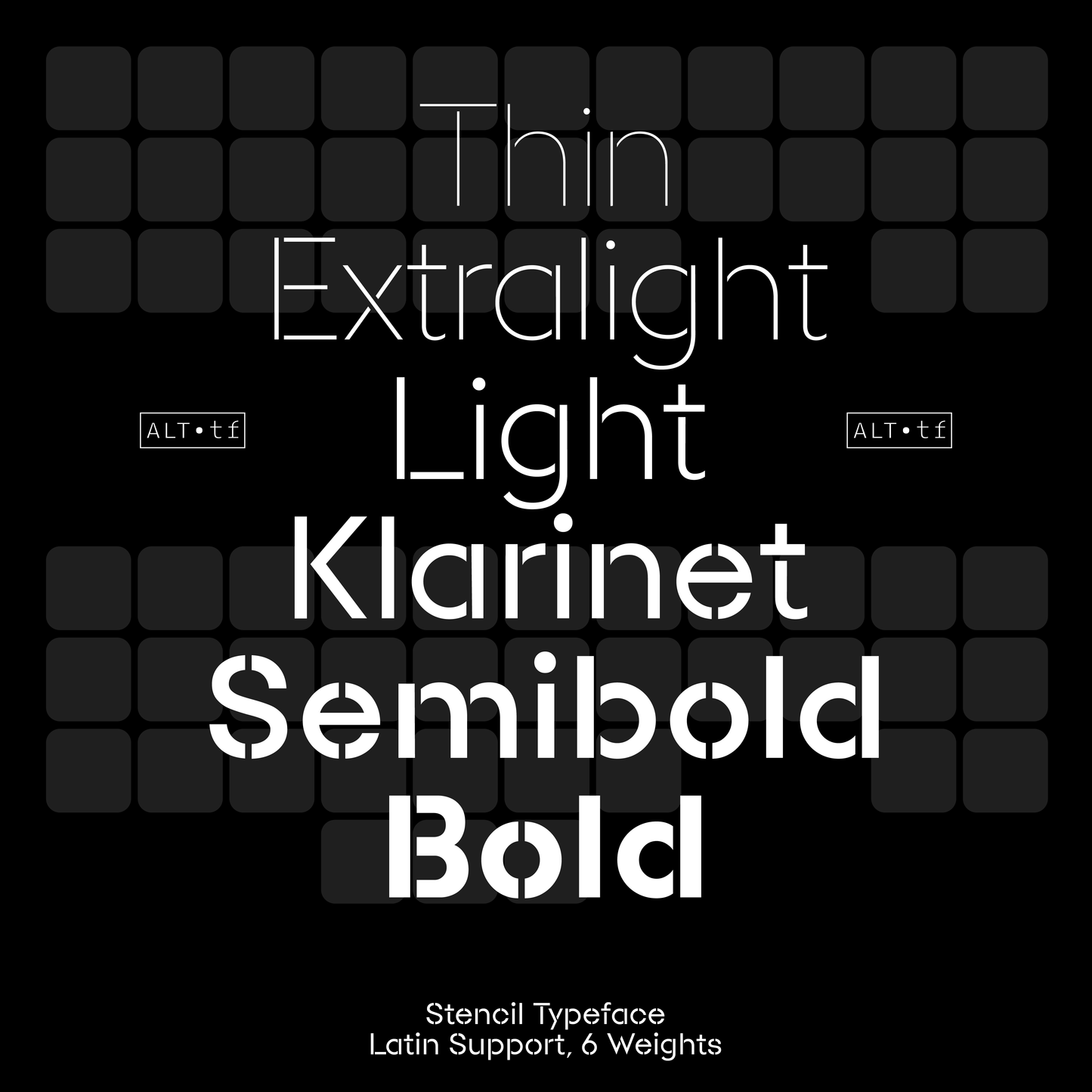
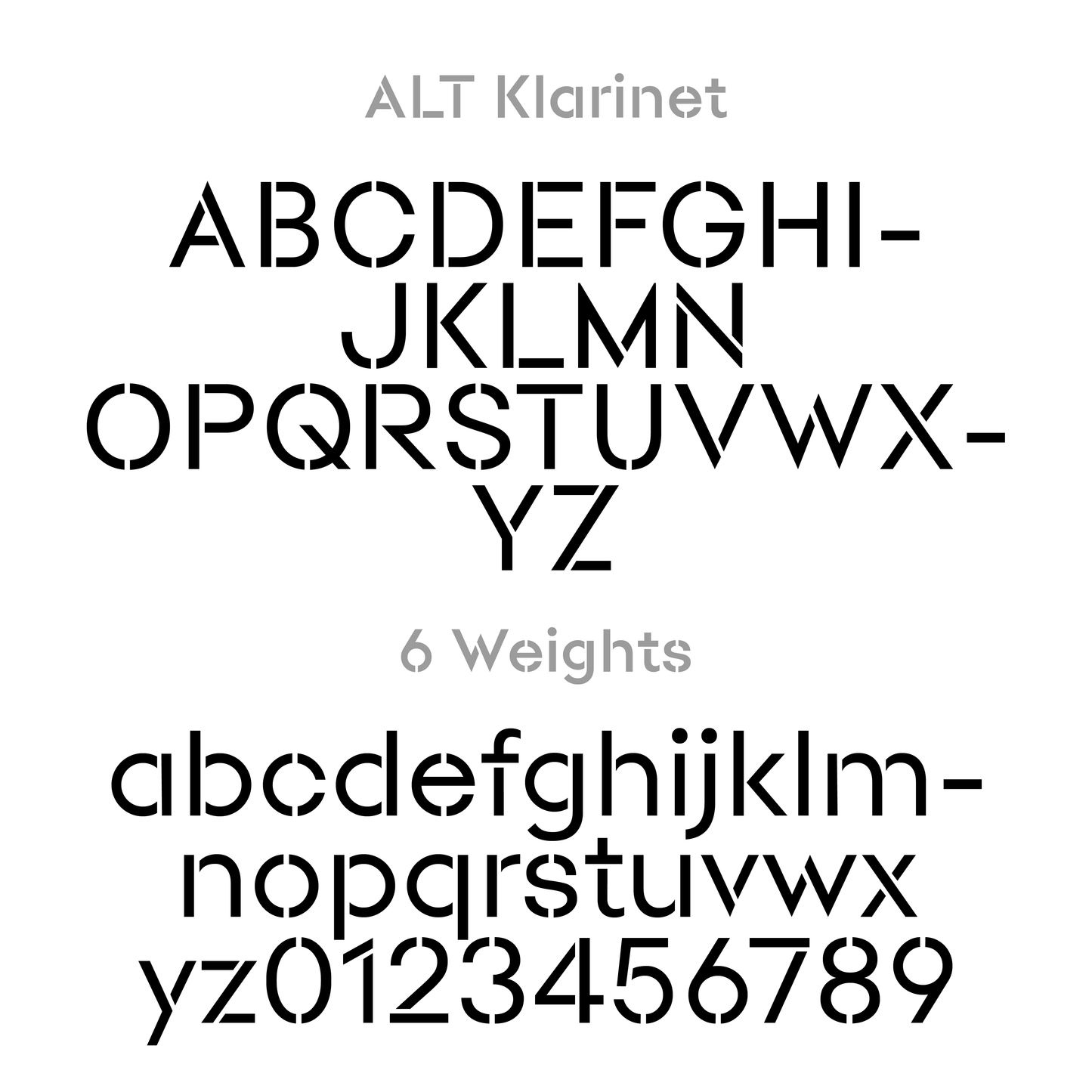
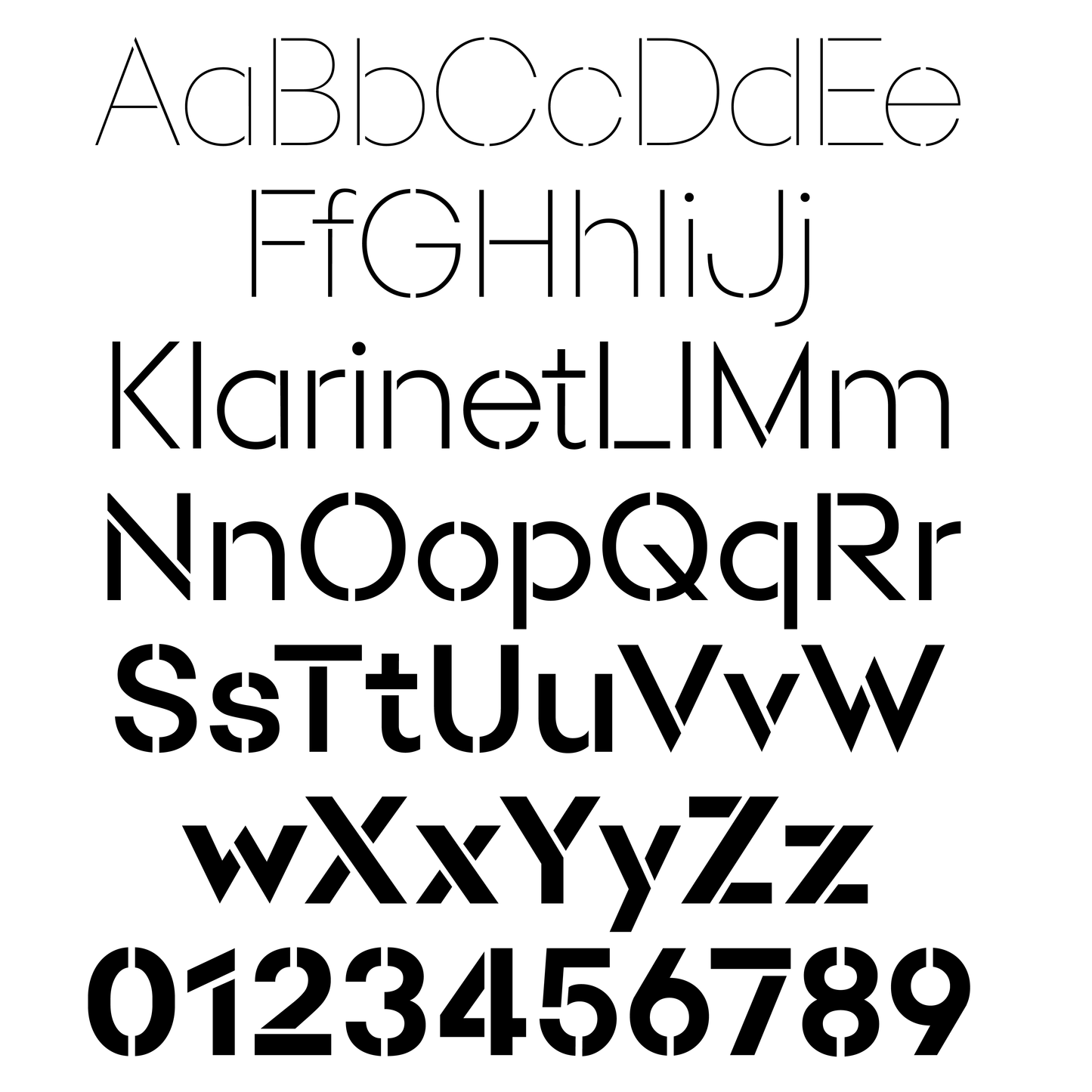
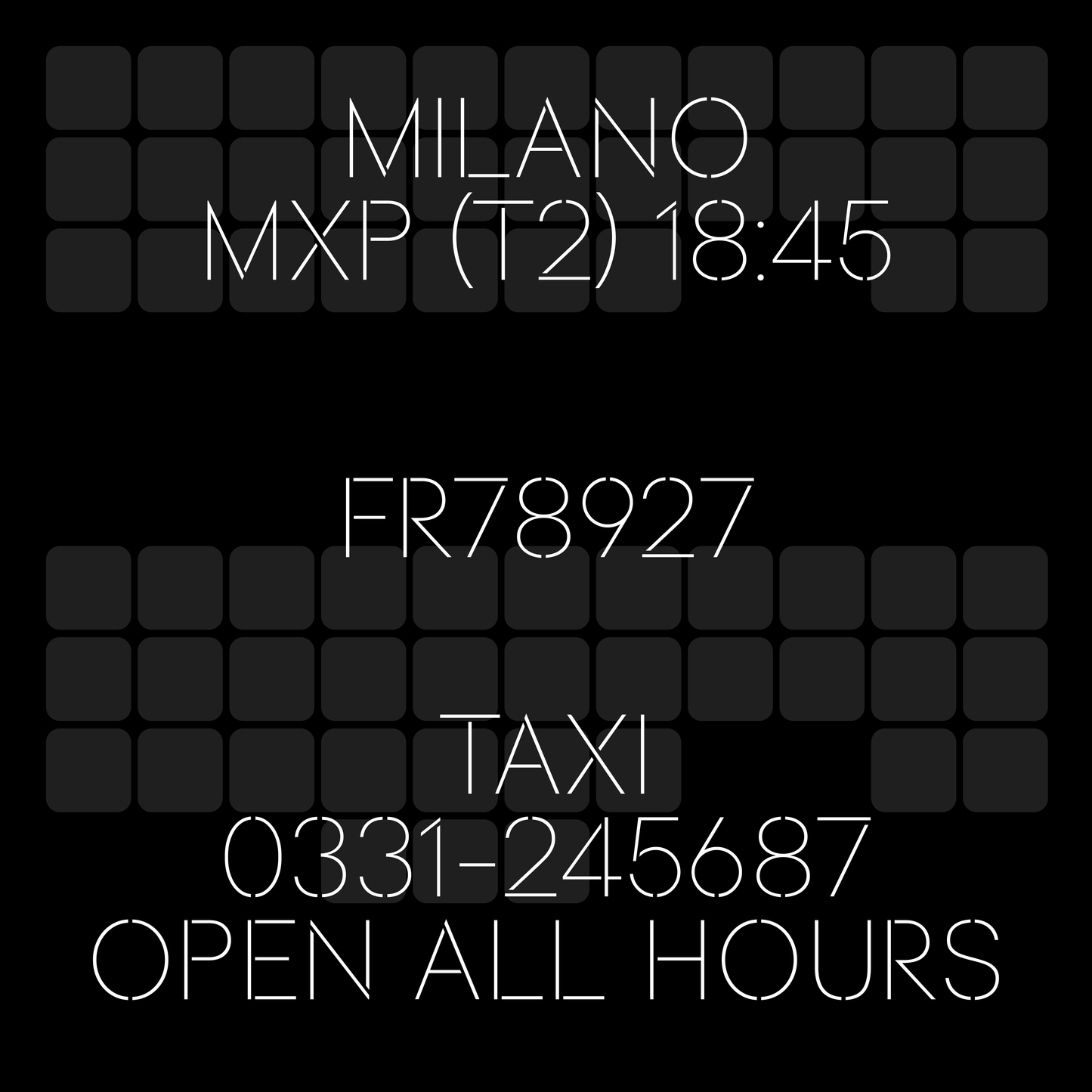
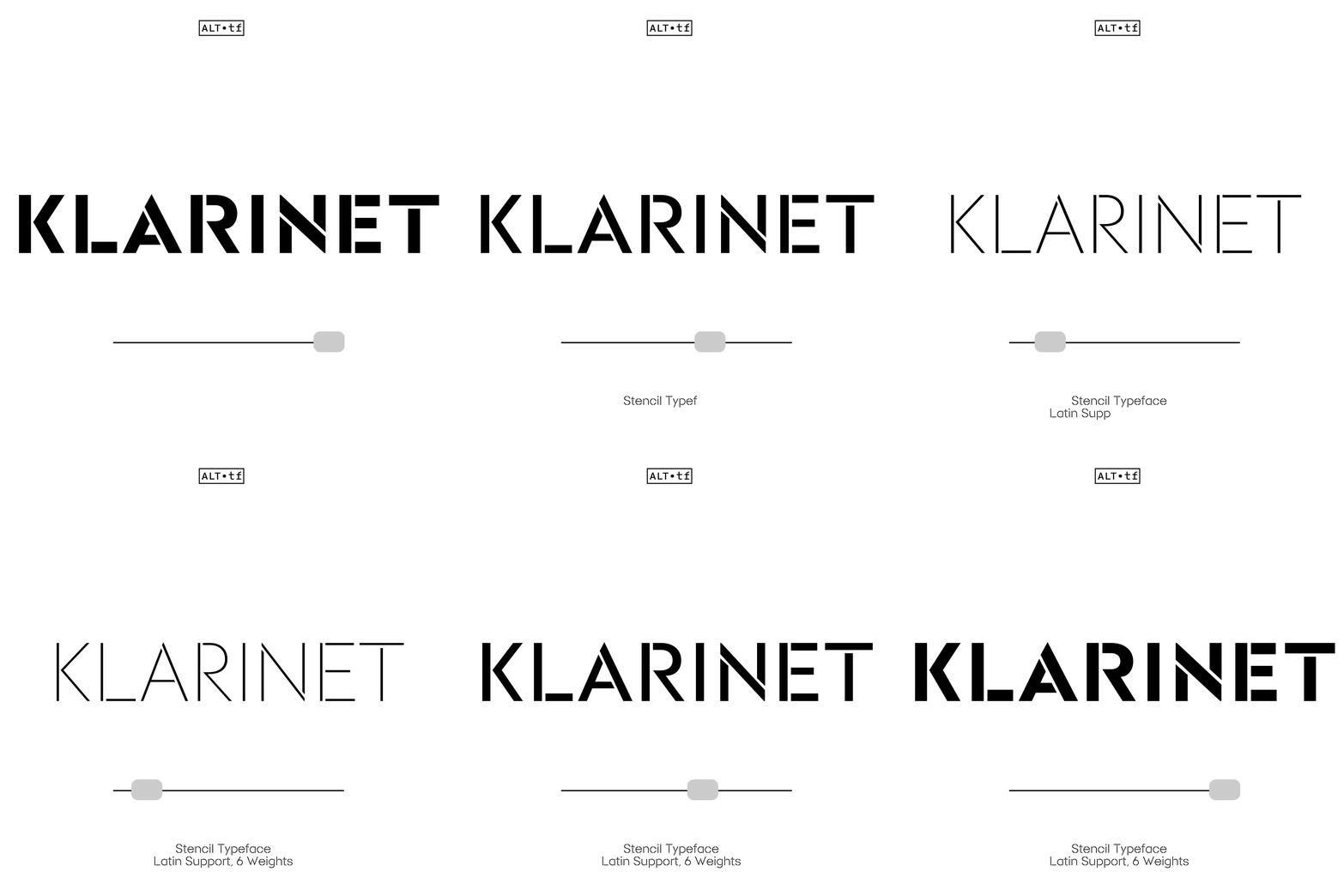
Introducing our first contemporary sans-serif stencil typeface. Blending modern design with classic stencil details, ALT Klarinet is equipped with 6 font weights for maximum versatility, each character in ALT Klarinet is meticulously crafted to ensure clarity and readability, even in smaller sizes.


Blending modern design with classic stencil details, ALT Klarinet is equipped with 6 font weights for maximum versatility, each character in ALT Klarinet is meticulously crafted to ensure clarity and readability, even in smaller sizes. ALT Klarinet's stencil style features strong, clean lines that create a powerful visual impact, from light to heavy, whilst it's six weights, offer flexibility and depth to your typography.

ALT Klarinet's stencil style features strong, clean lines that create a powerful visual impact, from light to heavy, whilst it's six weights, offer flexibility and depth to your typography. Whether you need a subtle touch or a commanding presence, this typeface delivers. 

- 393+ glyphs

- 244+ languages supported

- Diacritics

- Symbols & fractions

- 6 weights (Thin > Bold)

Skip to product information
1 of 22
Character Map
Supported Languages
Credits
Buy ALT Klarinet
License type
Desktop / Social Media / Digital Ads
Web
Logo / Mark
Broadcasting / Film / Music Streaming
Application
Basic License (Personal-Non Profit)
Font
Thin
Extralight
Light
Regular
Semibold
Bold
Family
License Owner
Company Size
Total (excl VAT)